

The Changing landscape of Rural India: Rural Climate Resilience and Economic Self-reliance
India faces a significant challenge as we strive to become a developed, high-income economy by 2047, which marks the centenary of our independence. Our rural population continues to grow at a rate of 0.41%, although this growth is somewhat tempered by high migration to urban areas. This ambitious vision, termed “Viksit Bharat @2047”, aims for a GDP of approximately USD 30 trillion and a per capita income of around USD 18,000, compared to the present USD 2,818 (as of 2025). To achieve this transition, we must sustain an average annual GDP growth rate of approximately 7% to 8% over the next two decades. Although this is attainable, we cannot overlook the needs of more than 950 million people living in rural areas.
To achieve the outlined target, the Government of India is concentrating on scaling economies, infrastructure development, industrial and technological growth, and social development. While the three key pillars focus on the urban population, social development only addresses 35% of the overall population. This creates a 25-35 dilemma, highlighting a significant disparity. We preach the axiom of “sabka saath sabka vikas” (development for all), but this perspective often overlooks the rural population. Our approach to rural development is primarily centred on ensuring universal access to healthcare and education, as well as improving the quality of life. While these initiatives are important, they are ultimately inadequate.
Rural India is currently undergoing a critical transformation, driven mainly by climatic changes, technological advancements, changing agricultural practices, and a renewed emphasis on entrepreneurship aimed at promoting sustainable livelihoods. However, issues such as increasing climate variability, resource depletion, and migration are also contributing to a growing discourse on these challenges. In 2026, unseasonal rains caused widespread agricultural damage across India, especially in Maharashtra and Rajasthan, severely affecting winter Rabi crops. Extreme weather events, including heavy rainfall and hailstorms between January and March 2026, had a devastating impact on millions of hectares of standing crops.
Bihar’s renowned litchi harvest experienced an estimated 70% crop loss in 2026 due to erratic climate conditions and a massive infestation of litchi stink bug. Unpredictable monsoon patterns and extreme temperature shifts also ruined a significant portion of the mango harvest in 2026. In Maharashtra’s Konkan belt, sharp temperature fluctuations during the flowering stage resulted in poor fruit setting, followed by scorching April temperatures that damaged the fruit. Overall, there was a 15-20% decline in domestic production attributed to severe El Niño-driven weather patterns. Although both the Central and State governments are providing compensation, this climatic uncertainty is causing farmers in rural areas to move away from agriculture.
Climate change is undoubtedly one of the most significant threats to rural livelihoods, as extreme weather conditions are becoming more frequent. For small and marginal farmers, who constitute over 85% of India’s farming households, building climate resilience is no longer an environmental issue; it has become an economic necessity.
To address the challenges we face, we must create diversified, locally driven economies that generate livelihoods and employment. The market does not need to be limited to urban centres; there are enough markets and opportunities within local communities. It is very clear that rural economies cannot depend only on agriculture for their sustenance. Developing multiple income streams will significantly improve household resilience. Although climate change presents undeniable risk, we at Development Alternatives see it as an opportunity to reshape and redefine rural development.
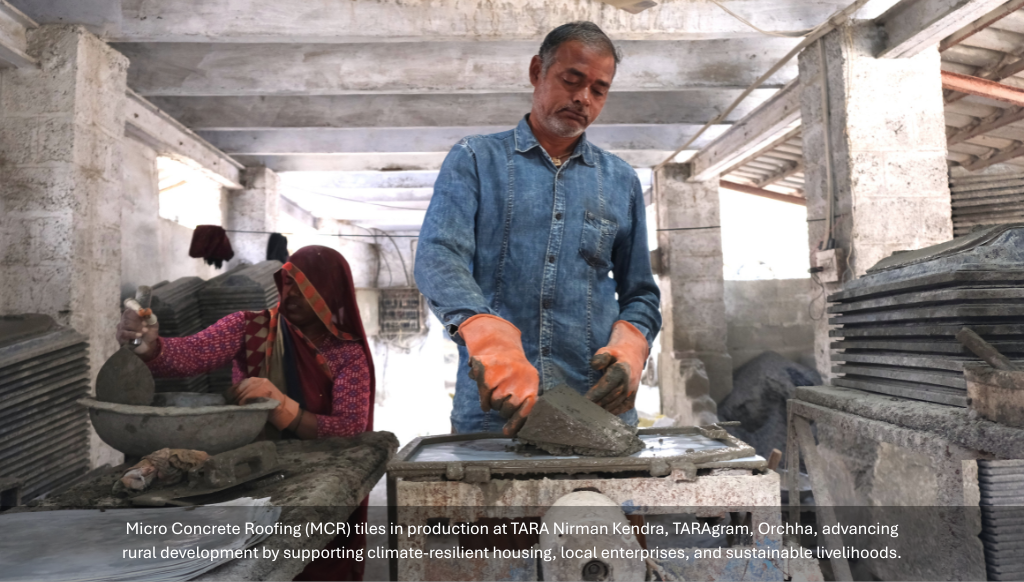
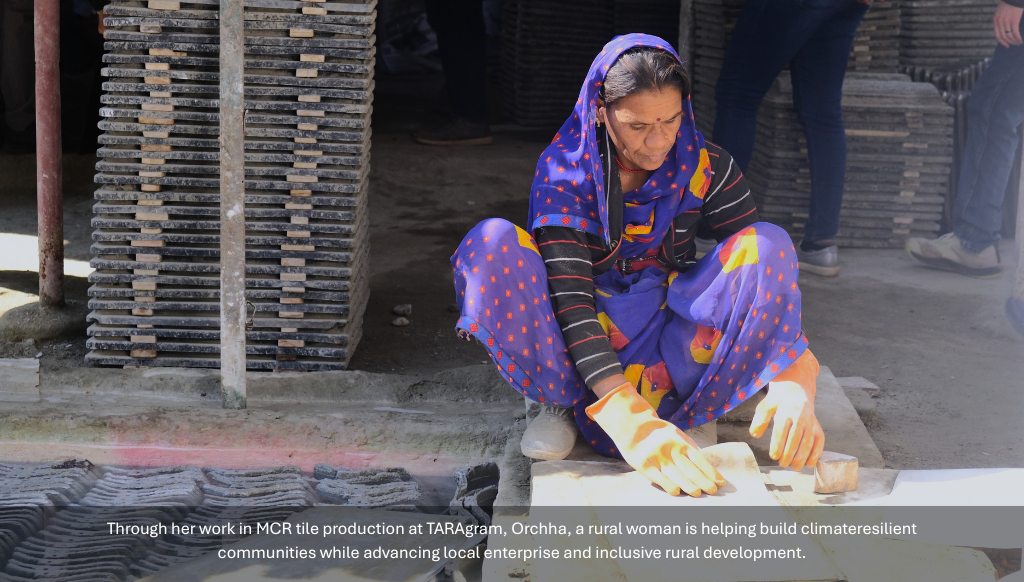
We are doing this through diversification in agricultural practices, including climate-smart agriculture, multi-cropping patterns, and alternate agricultural practices. At Development Alternatives, we support villages with small-scale technologies, such as mechanised pottery systems, waste-based building materials, Common Facility Centres, value addition of banana pseudostem, zero-energy bricks made from waste soils, digital service and learning centres, and small-scale in-house food processing units. These initiatives aim to create alternative income sources and increase resilience against climate vulnerability.
These are already helping villages become engines of inclusive growth, supporting rural economies in times of vulnerability and making them resilient and productive, thereby contributing to Viksit Bharat.
The views expressed in the article are those of the authors and not necessarily those of Development Alternatives.
This blog first appeared as an editorial in Development Alternatives Newsletter July 2026 Sustainable Entrepreneurship with Technology as a pathway for Rural Development.


Leave a Reply