
Beyond Access: Towards Reliable and Sustainable WASH Services in India
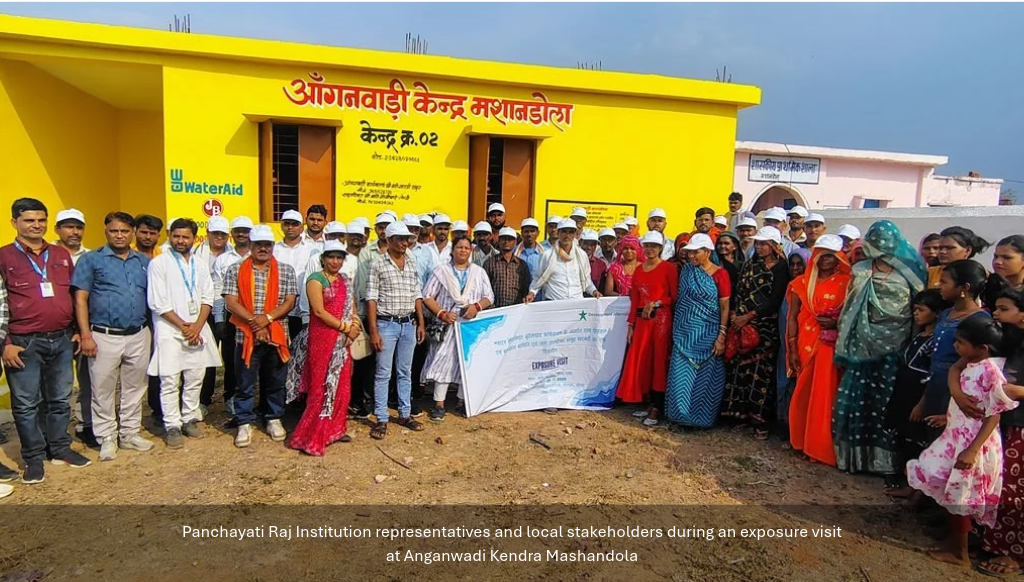
When the Jal Jeevan Mission (JJM) was launched in August 2019, barely 17% of India’s rural households had a tap-water connection. By July 2026, this figure had risen to more than 82%, covering nearly 15.9 crore of the country’s 19.36 crore rural households. [1] In just seven years, more than 12 crore additional households gained access to piped water supply.
These figures represent much more than an expansion of infrastructure. A tap within the home can mean time saved, particularly for women, greater dignity, improved hygiene, and a fundamental change in a household’s everyday relationship with water. The ambition, too, has evolved. What was once primarily a question of access is increasingly becoming a question of assurance.
And that is where the next challenge begins.
The Department of Drinking Water and Sanitation’s national functionality assessment, conducted across 2.37 lakh households in nearly 20,000 Har Ghar Jal villages, offers an important perspective. While 98.1% of surveyed households had tap connections, only 86.5% had functioning connections. Further, 80.2% received adequate quantities of water, 83.6% received water regularly as scheduled, and 76% received water free from bacteriological contamination. [2]
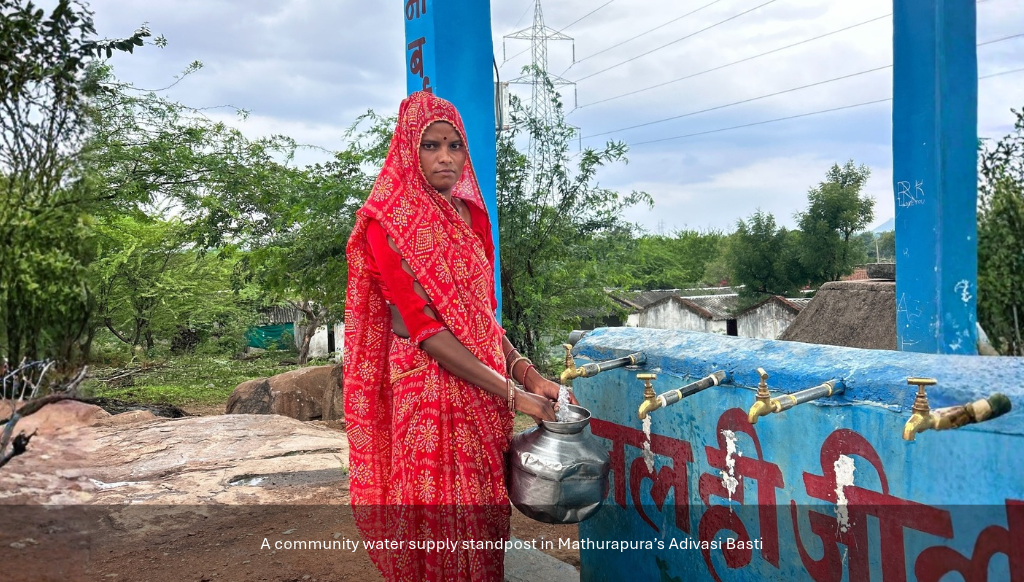
The difference between these figures are more instructive than any single indicator. They demonstrate that a connection marks the beginning of a water service, not its completion. This distinction becomes even more important when we consider the households most vulnerable to service failure. National averages can also conceal significant variation between states and communities. An intermittent water supply inconveniences everyone, but it disproportionately affects those who are less able to cope with disruptions, including households without storage facilities, older people, persons with disabilities, and women who may have to seek alternative sources of water when taps run dry. Similarly, a sanitation facility without an adequate water supply does not resolve the problem; it merely shifts the burden to the household.
Equity, therefore, cannot simply mean providing everyone with the same infrastructure. It must mean ensuring that everyone can use and depend on the service.
This requires looking beyond the household connection. Water must be sourced sustainably, remain safe throughout its journey to the household, and be managed responsibly after use. Drinking water, groundwater, sanitation, greywater, local water bodies, and catchments are interconnected, even if they fall under different programmes or administrative responsibilities. At the village level, they form part of a single water cycle.
The transition to Jal Jeevan Mission 2.0 is significant in this respect. Its emphasis on service delivery, operation, and maintenance, source sustainability, and community participation recognises that infrastructure created at scale must now be sustained at scale. [3]
As the mission itself makes clear, sustaining millions of individual assets cannot be achieved through top-down efforts alone.
The strongest water systems will ultimately be those in which local institutions know where their water comes from, understand how much is available, and identify which households are underserved and have the capacity to respond when systems fail. Gram Panchayats and village institutions must therefore move beyond participating in a scheme to become custodians of the service.
The same principle applies to sanitation. Swachh Bharat Mission-Grameen Phase II has broadened the focus from toilet access to sustaining open defecation-free outcomes and managing solid and liquid waste. [4] The direction is clear: the next generation of water, sanitation and hygiene (WASH) outcomes will depend less on individual assets functioning in isolation and more on local systems working together.
India has demonstrated what can be achieved when ambition, public investment, and implementation converge at extraordinary scale. The next test is more complex, and perhaps harder.
Can a household rely on its water supply tomorrow, not simply receive a connection today? Can the most vulnerable household enjoy the same quality of service as one that is easiest to reach? Can communities sustain these systems after construction teams have left?
Universal coverage is a milestone. Universal service is a continuing responsibility.
The last mile in WASH is no longer simply the distance to the final household; it is the distance between access and assurance. Closing that gap must define the next chapter of India’s water and sanitation journey.
Reference
- Ministry of Jal Shakti. 2026. “Initiatives Adopted for Quality Drinking Water Supply under Jal Jeevan Mission.” Press Information Bureau, Government of India. August 6, 2026. https://www.pib.gov.in/PressReleasePage.aspx?PRID=2295576.
- Department of Drinking Water and Sanitation. 2024. Functionality Assessment of Household Tap Connection: National Report 2024. Survey conducted by Ipsos, July–October 2024. Jal Jeevan Mission website. https://jaljeevanmission.gov.in/functionality-report-2024.
- Ministry of Jal Shakti. 2026. “Jal Jeevan Mission 2.0 Gains Further Momentum…” Press Information Bureau, Government of India. August 6, 2026. https://www.pib.gov.in/PressReleasePage.aspx?PRID=2295509.
- Department of Drinking Water and Sanitation. 2020. Operational Guidelines for Swachh Bharat Mission-Grameen Phase II. Ministry of Jal Shakti.
The views expressed in the article are those of the authors and not necessarily those of Development Alternatives.
This blog first appeared as an editorial in Development Alternatives Newsletter November 2026 Closing the Gaps: Delivering WASH to the Most Vulnerable
Leave a Reply