

Water Governance: Recalibrating Institutions for Water Security
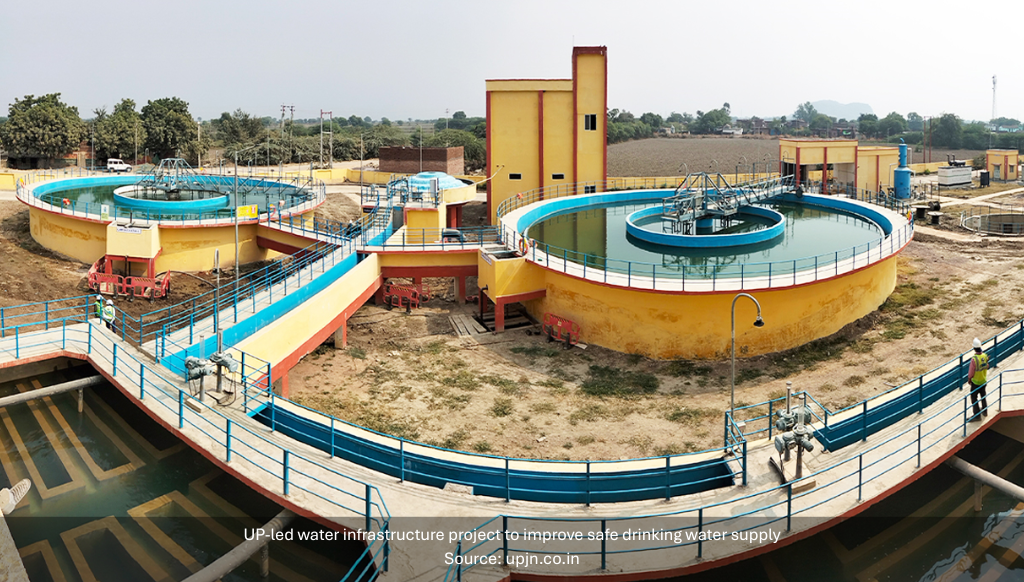
Water is central to India’s development agenda – it supports agriculture, sustains urban areas, drives industry, and underpins public health and wellbeing. While national and state policies are well laid out, the institutional framework often remains complex and fragmented, leading to challenges at the ground level. This editorial explores the structure of water governance in India and highlights the urgent necessity for convergence across agencies, sectors, and governance levels to enhance coordination and implementation. To anchor this analysis in practice, we draw on insights from the Uttar Pradesh Jal Nigam—a state water agency that seeks to balance supply needs with sustainability goals, and from Development Alternatives, which focuses on on-the-ground interventions.
The Fragmented Landscape of Water Governance
India’s water governance system is complex. Multiple ministries, departments, and parastatals share overlapping, sometimes conflicting mandates: irrigation and agriculture departments are responsible for managing canals and rural water supply; urban local bodies oversee piped drinking water and sewerage; state water resources departments supervise reservoirs and inter-state agreements. The Ministry of Jal Shakti sets overarching policy, but implementation and delivery are highly decentralised. This fragmentation leads to adverse impacts on planning, investment, and service delivery.
Water governance in India is marked by a paradox. On the one hand, the country has built an impressive range of institutions—such as Jal Nigams, Jal Boards, Water Supply and Sewerage Boards, Metropolitan Utilities, and Public Health Engineering Departments (PHEDs)—to provide drinking water and sanitation to a vast and diverse population. On the other hand, this very multiplicity of institutions has led to fragmentation, dysfunctional and frictional overlaps, and weak coordination, ultimately undermining efficiency and long-term sustainability. As climate stress, urbanisation, and groundwater depletion intensify, the need for institutional convergence and integration in state water governance cannot be underscored.
National policies such as the National Water Policy, Jal Jeevan Mission, and Atal Bhujal Yojana have set broad goals and funding frameworks, but translating them into action at the local level is hindered by state prerogatives, uneven institutional capacity, and conflicting priorities. At times, fragmentation can pose challenges for coordinated planning, efficient infrastructure use, and stronger integration across institutions. For instance, irrigation expansion may undermine groundwater sustainability, while urban bodies may struggle to maintain services despite large financial allocations. Data systems remain fragmented, restricting evidence based decisions. As a result, consequences become visible: chronic urban water shortages, rural schemes that falter after initial capital investment, and the continued overextraction of groundwater. Governance fragmentation lies at the heart of India’s water crisis.
Strengthening Water Security through Institutional Convergence:
Each state has organised its water supply and sewerage functions differently. States like Uttar Pradesh have a state-level Jal Nigam with statutory authority across urban and rural areas. Others rely on metro specific boards—Delhi Jal Board, Chennai Metro Water Board, Hyderabad Metro Water Board—and leave the non metro areas to PHEDs or municipal bodies. There are others that operate through boards or authorities with limited jurisdiction.
A compelling solution to this issue is the consolidated institutional model, as seen by the Uttar Pradesh Jal Nigam. As a dedicated state-level entity, it provides a single nodal structure for planning, execution, and coordination. Adopting this model has the following advantages:
- Coordination: Reduces duplication, aligns urban and rural planning, and integrates sewerage and wastewater management.
- Standardisation: Enables consistent technical standards, procurement, asset management, and service benchmarks.
- Sustainability: Pools resources, cross-subsidises weaker regions, attracts skilled manpower, and engages with national programmes and partners.
- Data integration: Enhances a unified platform for transparency, monitoring, and accountability.
Critics warn of centralisation, but decentralised operations within a unified framework can balance local responsiveness with strategic oversight. The principle is clear: every state needs a strong, consolidated nodal institution with statutory authority, professional capacity, and a mandate for convergence across water supply, sewerage, and sustainability.
Development Alternatives (DA) complements this model by treating water as part of an integrated socio-ecological system. By combining rainwater harvesting, recharge structures, wastewater reuse, and pond rejuvenation, it reduces pressure on conventional sources while enhancing resilience. Projects such as citizen science and water quality monitoring in Udaipur, check-dams in Bundelkhand, and pond rejuvenation in NCR Delhi and Uttar Pradesh underscore three highly relevant lessons: (i) source sustainability must be embedded in service delivery, (ii) data and planning must cross institutional boundaries, and (iii) decentralised stewardship must strengthen systems and communities. In effect, Development Alternatives’ work provides the missing operational layers between national policy frameworks and local institutions, with state- and district-level entities serving as bridges. It shows that convergence is not only desirable—it is achievable, scalable, and already underway in pockets.
Future Forward: Towards Water Positive Systems
As India enters a decisive decade for water security, the question is no longer whether Jal Nigams should act as system stewards. Instead, it is how quickly these Jal Nigams can acquire the capabilities to do so. The future of India’s water security will not be determined by how many kilometres of pipelines have been laid; it will be by how effectively institutions have worked together across silos. Institutional convergence is not merely administrative reform—it is a prerequisite for water security that realigns authority, incentives, and accountability around public needs, hydrological realities, and service outcomes, especially fair, equitable, and affordable water access for all.
Jal Nigams, combining centralised (strategic planning, standards, and coordination) and decentralised functions (zonal, district, and municipal units), can become the backbone of a resilient, equitable, and climate-ready water future, and must be empowered to act as system stewards. Convergence is not administrative tinkering—it is a prerequisite for resilience, equity, and sustainability. Empowered Jal Nigams can become the backbone of a climate-ready water future. Moving forward, aligning infrastructure expansion with equally strong and resilient governance systems will be essential to ensuring long-term impact.
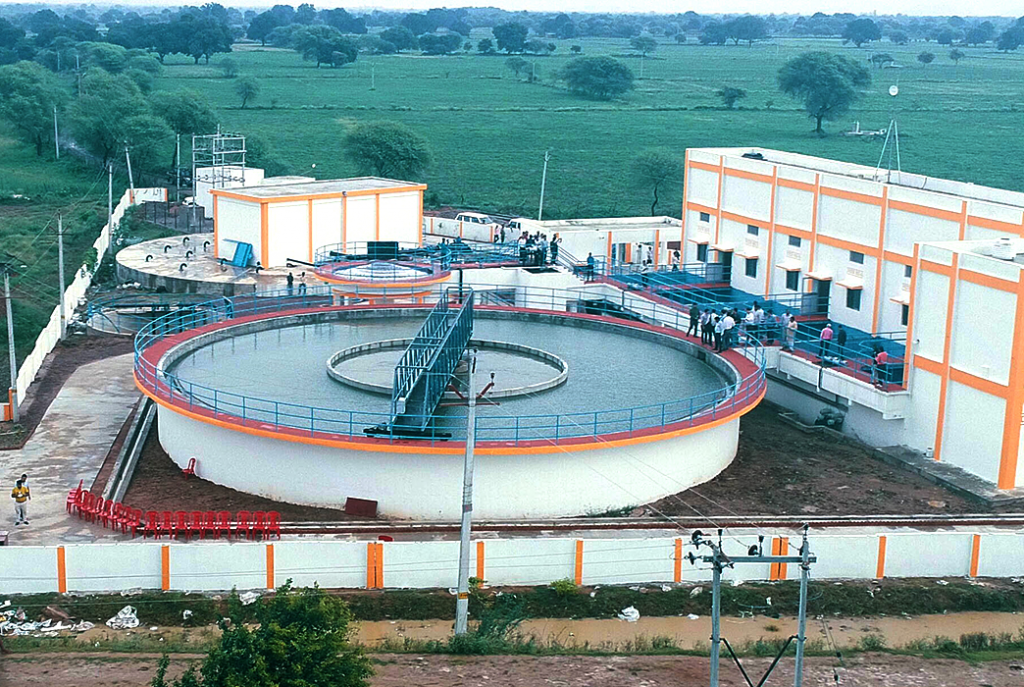
Jal Nigam interventions in safe drinking water management
The views expressed in the article are those of the authors and not necessarily those of Development Alternatives.
This blog first appeared as an editorial in Development Alternatives Newsletter March, 2026 https://devalt.org/newsletter/88-strengthening-water-security-through-policy,-technology,-&-community-stewardship



Leave a Reply