

Making the Village Work: Integrated Development in Practice
For years, rural India has seen significant development through various schemes aimed at improving infrastructure and providing funding. The scale is undeniable—and so are the results. Since 2019, the Jal Jeevan Mission has provided tap water connections to more than 140 million rural households, boosting national rural coverage from about 17% to over 75% in six years. Similarly, the Swachh Bharat Mission (Gramin) has led to the construction of over 110 million toilets, vastly improving sanitation access across villages. These are not small achievements. But scale alone is no longer the question.
Yet, despite this progress, last-mile delivery continues to fall short in many villages. This is because while services have expanded, they often reach villages in parts. For instance, water systems without source protection, sanitation without waste management, or infrastructure without local ownership. These are not failures in isolation, but rather symptoms of fragmented delivery—each effective individually, but limited in isolation. The real shift begins when these components align.
In Nalagarh and Jhajjar, integrated water and waste management systems are showcasing what convergence looks like in action. Waste is processed rather than simply discarded, and water systems are maintained, not just installed. Villages are noticeably cleaner; more importantly, communities are managing these systems themselves. This shift is not merely environmental; it also involves changes in behaviour and institutions.
In Rudraprayag, integration is shaped by constraint. Fragile ecosystems, climate variability, and limited access to services make isolated interventions ineffective. Here, the need is not for more schemes, but for systems that work together. Water sources are increasingly disrupted by climate variability. Agriculture remains largely subsistence-based, relying on rainfall and small landholdings. Healthcare facilities are often distant and can be inaccessible during landslides. Schools face challenges related to inadequate infrastructure, which negatively impacts both attendance and learning outcomes. Additionally, livelihood opportunities are limited, leading many to view migration as the default choice for survival.
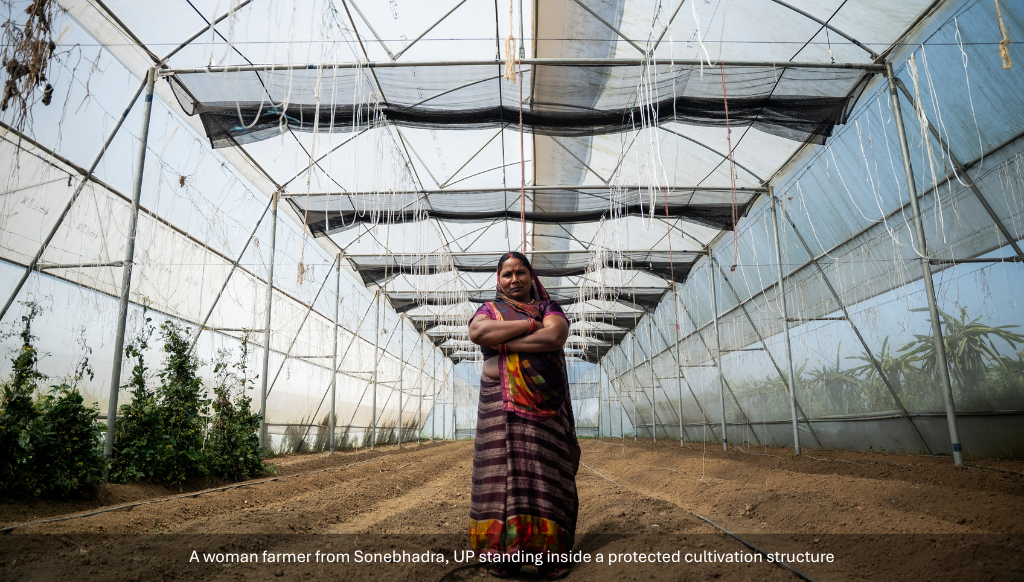
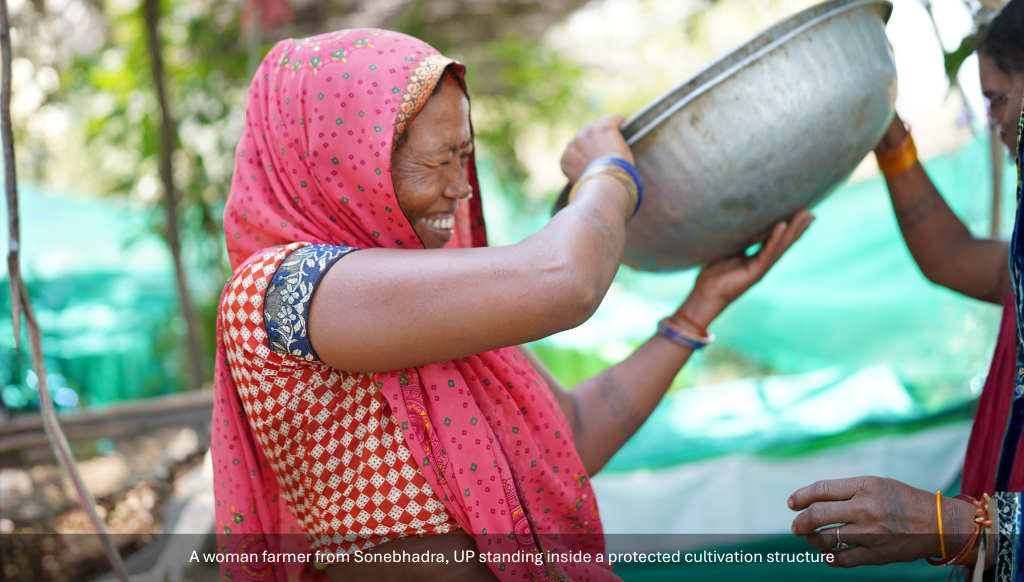
In Sonebhadra, the transformation is most evident through the integration of multiple challenges into a single system. What were once isolated struggles—unsafe drinking water, limited livelihoods, low agricultural productivity, and weak local systems—are now being addressed together. Clean drinking water is provided through community-managed systems like JalTARA, while improved agriculture, including WADI and multi-layer farming, has enhanced productivity. Local enterprises, ranging from chappal-making to poultry and fisheries, have generated stable sources of income. Waste is being repurposed into compost, which is then returned to the land, creating a sustainable loop. What stands out is that women are at the centre of this change; they manage enterprises, oversee systems, and play key roles in decision-making, both within their households and in the wider community.
As these systems begin to reinforce one another, livelihoods stabilise, migration pressures ease, and villages start to function as local economies. Development, in this context, is no longer delivered in fragments; it is being built from within, with each intervention strengthening the others.
These are not isolated successes—they point to a larger shift.
Integrated village development brings together water, sanitation, waste management, education, and local governance into a cohesive system. When these segments are strengthened together, their outcomes begin to reinforce one another. Water availability improves due to conservation efforts, villages remain clean because waste management systems are fully operational, schools become more effective as learning environments improve, and communities grow stronger by participating in these integrated systems.
And as a result, the outcome begins to reflect this shift.
The force of this transformation does not stem from external forces; instead, it emerges quietly from within communities. It builds from within. Through communities that are informed, involved, and empowered to manage what shapes their daily lives.
This is the essence of making a village work; it is not about adding more elements but rather about uniting what already exists and strengthening the connections among them. The focus should not be solely on isolated interventions, but on empowering the entire system as a whole.
Because when these segments move together, progress does not simply add up. It multiplies and moves forward.
The views expressed in the article are those of the authors and not necessarily those of Development Alternatives.
This blog first appeared as an editorial in Development Alternatives Newsletter May 2026 Making the Village Work: Integrated Development in Practice


Leave a Reply