

Indian Brick Sector needs System change
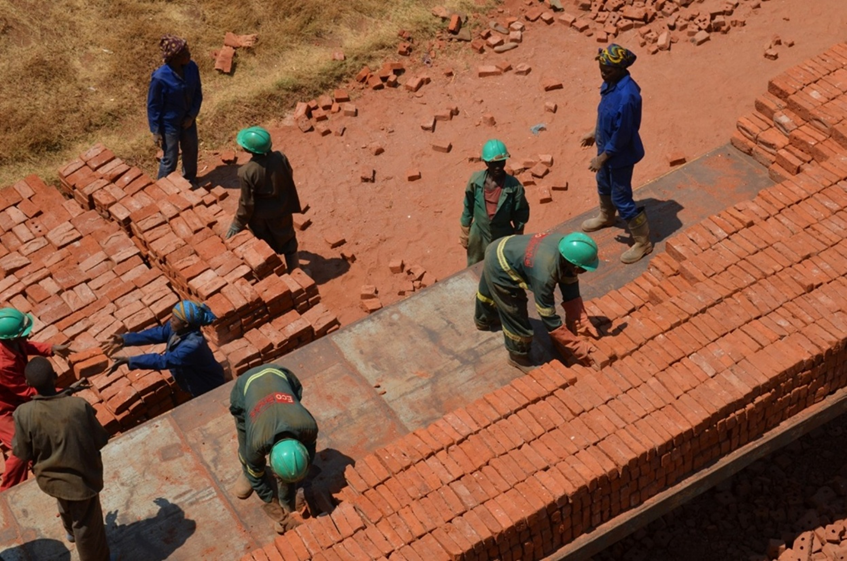
Workers at a brick kiln factory
India’s brick sector sits at the intersection of extreme poverty and environmental degradation. With over 1.4 lakh kilns producing more than 250 billion bricks annually, it consumes nearly 50 million tonnes of coal and emits 66 to 84 million tonnes of CO₂ every year. It is also a major contributor to air pollution across the Indo-Gangetic plains. At the same time, the sector supports the livelihoods of over 10 million workers, many of them from vulnerable communities. This dual reality makes decarbonisation as much a development challenge as an environmental one.
Why Decarbonisation Matters for Sustainable Urban Ecosystems
India’s urban growth is directly linked to the brick sector. Bricks remain one of the most widely used construction materials, which means the environmental footprint of cities is closely tied to how bricks are produced. As cities expand, demand for construction materials is rising sharply. This translates into higher emissions, increased coal consumption, and growing pressure on natural resources such as topsoil and water. Brick kilns are often concentrated around urban and peri-urban areas, making them significant contributors to local air pollution, land degradation, and declining air quality. Decarbonising the brick sector is therefore critical for building healthier and more sustainable cities. Reducing emissions from kilns can directly improve air quality, while shifting to resource-efficient materials can help reduce pressure on land and ecosystems.
At the same time, the sector is deeply linked to livelihoods in urban and peri-urban economies. Any transition must, therefore, balance environmental goals with employment, income security, and working conditions. For urban ecosystems to be truly sustainable, construction practices must align with climate goals. This means moving towards low-carbon materials, cleaner production systems, and more efficient resource use, while ensuring that the transition remains inclusive. In this context, decarbonising the brick sector is not just an industrial priority. It is central to the future of sustainable, liveable, and resilient cities.
The Real Challenge
Despite its environmental footprint, burnt clay bricks are unlikely to disappear anytime soon. Alternatives such as fly ash bricks and Autoclaved Aerated Concrete (AAC) blocks are expanding, but can currently meet only a limited share of demand. With projections suggesting that India’s brick demand could reach 2000 billion units by 2047, the question is not whether the sector will continue, but how it will evolve.
The sector is often treated as a technological challenge, but it is a highly distributed and largely informal system. Multiple kiln technologies coexist, from highly polluting clamp kilns and widely used fixed chimney kilns to cleaner zig-zag kilns and capital-intensive tunnel kilns. Each has its own constraints, and no single solution can address the scale and diversity of the sector. Emissions themselves come from multiple sources, including fuel combustion, incomplete burning, clay decomposition, and dust handling. This complexity makes it clear that decarbonisation cannot be achieved through technology alone.
What Is the Solution?
Some solutions can deliver immediate gains. Zig-zag kilns improve combustion efficiency and can reduce coal use by up to 40% while significantly lowering emissions. Simple process improvements such as better airflow, improved stacking, and draft control can deliver additional savings without large investments. Fuel shifts towards biomass and alternative fuels also offer potential, although supply chains remain a constraint.
However, deeper decarbonisation will require structural changes. Technologies such as vertical shaft brick kiln and tunnel kilns offer higher efficiency, while material substitution through fly ash bricks, AAC blocks, and emerging options like geopolymer bricks can reduce or eliminate the need for firing. Electrification and hydrogen-based systems represent future pathways. These options, however, demand higher capital, stronger infrastructure, and a more formalised industry.
Technology alone will not drive this transition. Markets need to accept low-carbon materials, and policy must move beyond regulation to active incentives. Finance mechanisms must support small and informal operators who currently lack access to capital. Public procurement, tax incentives, and blended finance can play a critical role in accelerating adoption.
The human dimension is equally important. The sector employs millions of unskilled and semi-skilled workers, often with limited access to social protection. Any transition must therefore include skill development, improved working conditions, and better access to welfare schemes. Without this, decarbonisation risks becoming socially disruptive.
Way Forward
A phased pathway is essential. In the short term, the focus should be on accelerating conversion to cleaner kilns, promoting non-topsoil materials, and increasing mechanisation. In the medium term, demand can be driven through public procurement and carbon-linked incentives. Over the long term, the sector must gradually shift towards non-fired materials and low-carbon production clusters.
The brick sector does not lack solutions. It lacks alignment. Decarbonisation will depend on how effectively technology, markets, policy, finance, and people are brought together. The real challenge is not identifying what needs to be done but ensuring that it happens at scale.
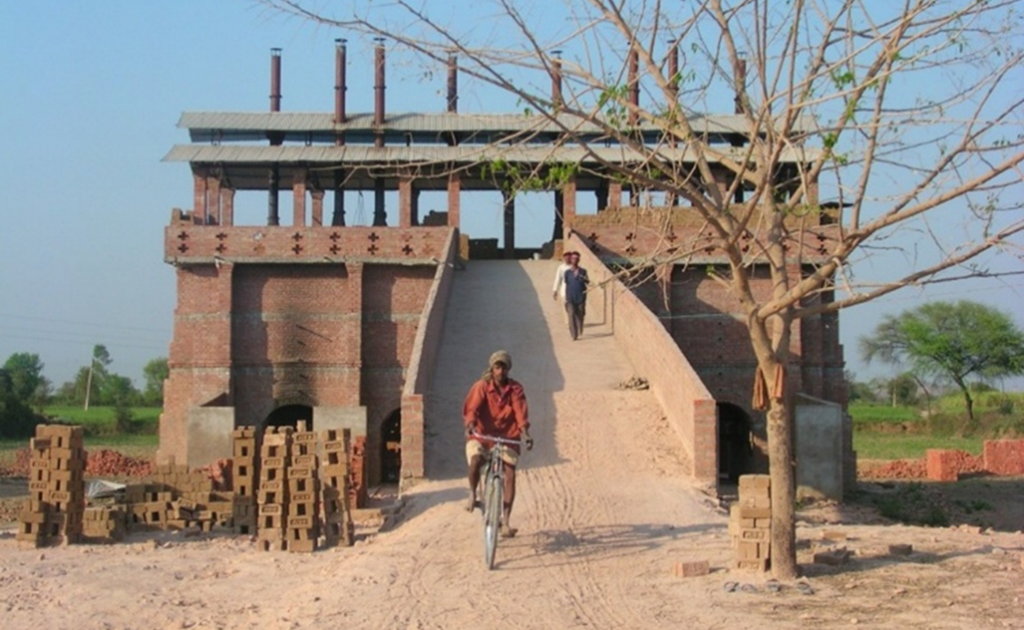
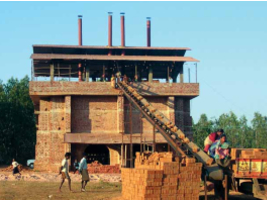
A vertical shaft brick kiln
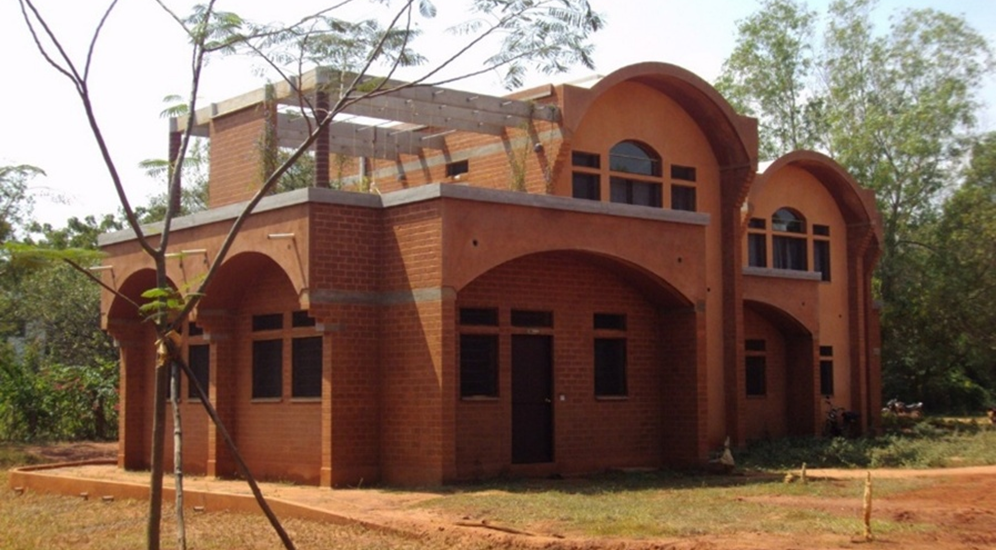
A building constructed using LC3 at the TARAgram Campus in Orchha, Madhya Pradesh.
The views expressed in the article are those of the authors and not necessarily those of Development Alternatives.
This blog first appeared as an editorial in Development Alternatives Newsletter April 2026 From Innovation to Impact: Advancing Sustainable Urban Systems


Leave a Reply